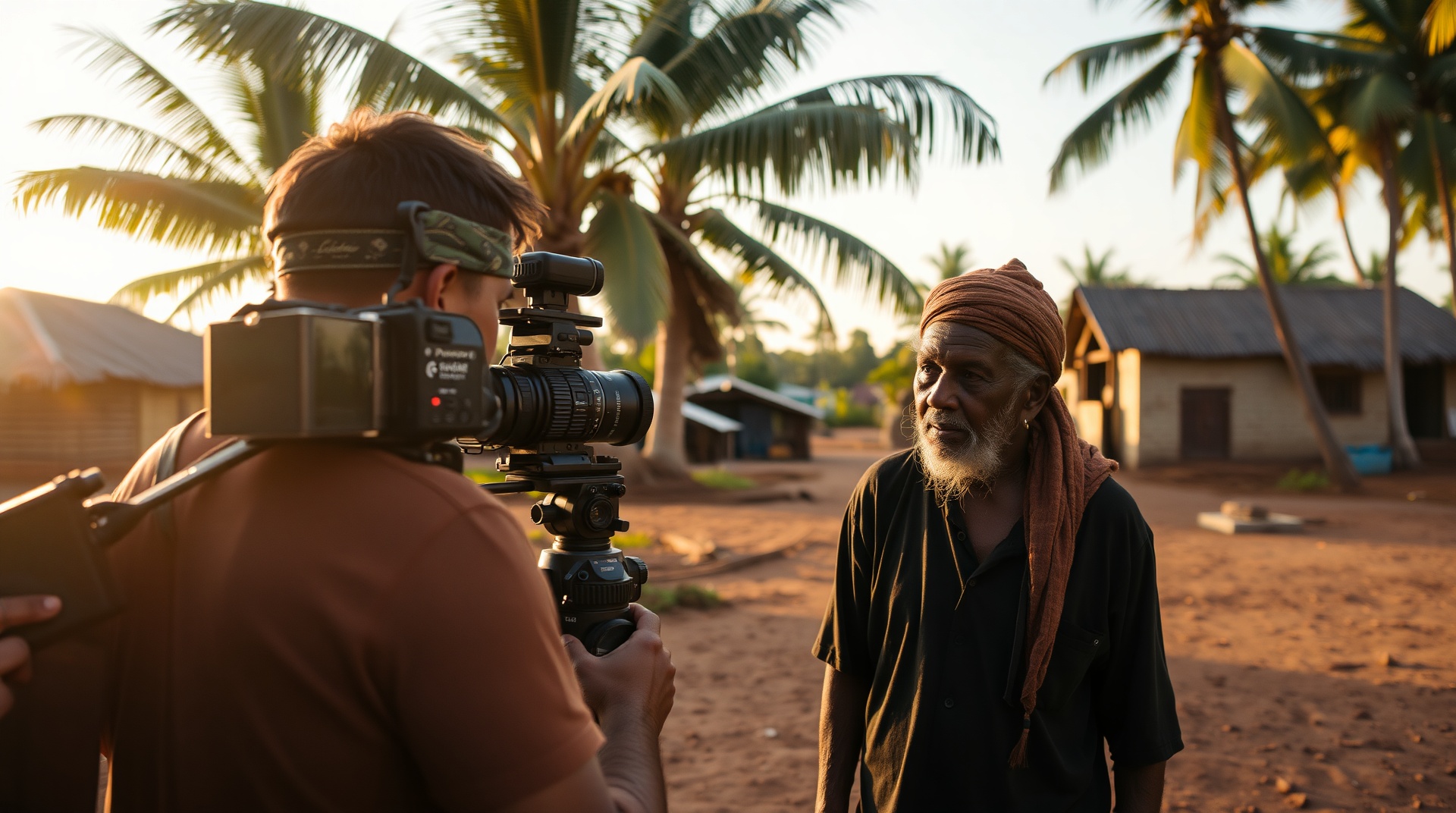
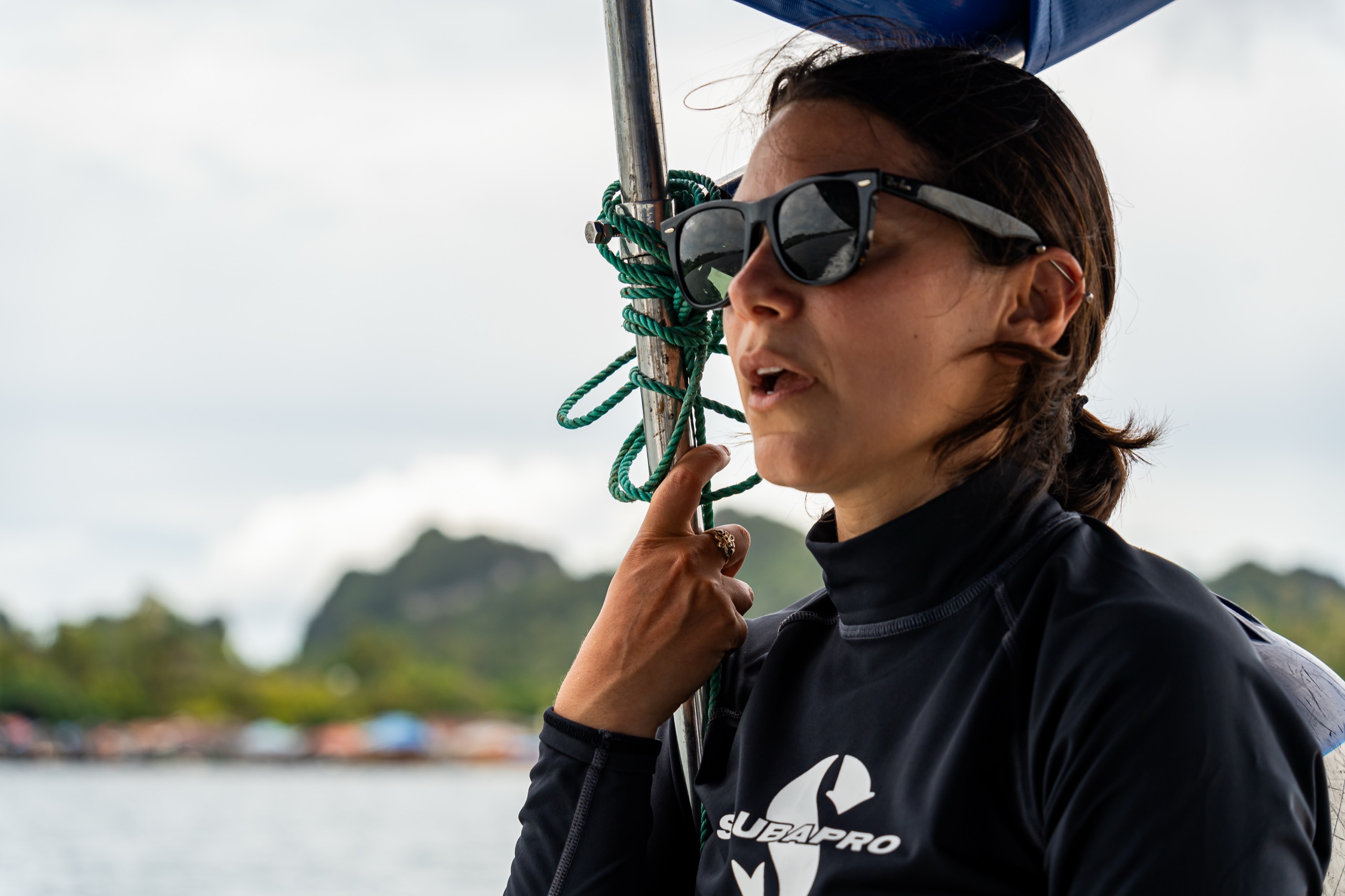
Why documentary storytelling for impact
A documentary isn't content. That's the first thing most people get wrong. Content fills a feed. A documentary changes how someone sees a problem.
The difference is intent. Content aims for engagement. Documentary aims for understanding. Content asks "did they watch?" Documentary asks "did they act?" These are fundamentally different goals, and they require different approaches to production, narrative, and distribution.
Impact documentary has a specific theory of change built into the production from day one. You don't make the film and then figure out what to do with it. You identify the change you want to see in the world, find the story that embodies it, and build the film to serve that outcome.
The Edges of Earth documentary
In 2022, when I left agency life to co-found Edges of Earth, the plan wasn't to make a documentary. The plan was to document frontline conservation work across the world and share those stories through whatever medium worked best.
But after a year of filming across 20+ countries, we had something that demanded a longer format. Stories that connected to each other. Themes that repeated across continents. A through-line about communities solving problems that governments and NGOs hadn't managed to fix.
The teaser premiered at COP30. Our short film premiered at Climate Week 2025. We were accepted into the International Ocean Film Festival in 2026. The full documentary is currently on the festival circuit.
None of that was planned from the beginning. It emerged from the work. And that emergence is itself a lesson about documentary storytelling: the best films aren't scripted. They're discovered.
We went to 53 countries planning to make social media content. We came back with a documentary. The stories were too big and too connected for 90-second clips.
Documentary vs brand film
Brands increasingly want to make documentaries. I'm glad. But there's a line that matters.
A brand film is controlled. The brand determines the message, approves the narrative, and owns the distribution. A documentary has editorial independence. The filmmaker follows the story wherever it leads, including into uncomfortable territory.
The best branded impact documentaries sit in the middle. The brand funds the production and provides access. The filmmakers maintain editorial control. The brand gets associated with honest, powerful storytelling without trying to control the narrative. Patagonia Films is the model here. They fund documentaries about environmental issues, let the filmmakers do their work, and the brand association is stronger than any ad could produce.
If a brand asks me to make a documentary but wants to approve every cut, I say no. That's a long commercial, not a documentary. Audiences know the difference.
Finding stories worth documenting
Not every conservation project makes a good documentary subject. After three years and hundreds of site visits, here's what I look for.
A protagonist with a transformation. Yosef going from dynamite fisherman to coral gardener. Amina convincing skeptical neighbors to plant mangroves. Maria presenting reef data to politicians. Without transformation, you have a profile, not a story.
Real tension. Economic pressure vs. environmental protection. Tradition vs. change. Community knowledge vs. outside expertise. If everyone agrees and everything is going well, there's no story.
Visual access. Documentary is a visual medium. If you can't see the work happening, if it's all meetings and spreadsheets, the film won't work regardless of how important the issue is.
Stakes that matter to the audience. The story needs to connect to something the viewer cares about, even if they've never been to Raja Ampat or Mozambique. Food security, livelihood, family, fairness. These are universal.
Working with communities on film
This is the hardest and most important part of documentary work. It's also where most filmmakers, including well-intentioned ones, cause harm.
We've developed practices at Edges of Earth that I'd recommend to anyone doing this work:
- Consent is ongoing, not one-time. People can change their minds about being filmed. Check in throughout production, not just at the start.
- Screen the film for the community first. Before any public release, the people in the film see it and have the right to request changes.
- Share the outcomes. If the film raises money or changes policy, the community should know about it and benefit from it.
- Leave the equipment sometimes. Some of the most powerful footage in our documentary was shot by community members themselves. Their perspective is different from ours, and it's often better.
Distribution for impact
A film nobody sees changes nothing. Impact documentary requires an impact distribution strategy, which is different from a theatrical release strategy.
Festival circuit builds credibility and press coverage. But the real impact distribution happens through targeted screenings for decision-makers, community screenings in the locations featured, educational licensing, and partner organizations embedding clips in their advocacy materials.
Our COP30 teaser wasn't released publicly. It was screened for 200 policymakers and conservation leaders in a closed session. That targeted distribution generated more outcomes than a million YouTube views would have.
The most impactful screening we've ever done was for 30 people in a government office. No red carpet, no festival laurels. Just the right people in the room.
Measuring documentary impact
Views don't equal impact. Here's what we track instead:
- Policy citations. Was the film referenced in government decisions or policy documents?
- Funding influenced. Did organizations or communities in the film receive funding as a result?
- Media amplification. Did journalists cover the stories featured in the film independently?
- Community adoption. Did other communities adopt practices shown in the film?
- Speaking invitations. Were we invited to present at forums where decisions get made?
By these measures, the Edges of Earth documentary has influenced marine protected area expansions, directed funding to three community conservation projects, and generated press coverage across 15+ international outlets. That matters more than a view count.
The COP30 premiere
Premiering the teaser at COP30 was a deliberate distribution choice. We wanted the first people to see the film to be the people who could act on it. Not general audiences. Not film critics. Policymakers, funders, and conservation leaders.
The response validated the approach. Three meetings came directly from that screening. One led to a partnership that is funding an expansion of a marine protected area we documented. Another led to an invitation to present at a regional conservation summit.
The full documentary is now on the festival circuit, which serves a different purpose: building public awareness and press coverage that reinforces the policy work. The order matters. Policy first, public second.
Lessons learned
Three years of documentary production across 53 countries, and here's what I'd tell someone starting this work:
- The story will surprise you. Every plan we made before arriving in a country got rewritten within 48 hours. Go with a framework, not a script.
- Relationships take time. The best footage comes on day 3 or 4, not day 1. Budget for relationship-building, not just production days.
- Your crew is your credibility. Who you bring matters. A small, respectful team that listens gets better stories than a large crew that takes over a space.
- Distribution is production. Think about who needs to see this film and how they'll see it from day one, not in post-production.
- Impact takes patience. The mangrove story we filmed in 2023 didn't influence policy until 2025. Documentary impact operates on longer timescales than social media metrics.
If you're interested in using documentary storytelling for impact, I'm happy to talk about how it works. Book me for a talk on documentary and impact storytelling, or reach out directly.
Frequently Asked Questions
What is documentary storytelling for impact?
Using documentary film specifically to drive outcomes: policy change, funding, public awareness, community action. The film is a tool for change, not just content.
How is impact documentary different from traditional documentary?
Impact documentary has a theory of change built into production from day one. You think about audience, distribution, and desired outcomes before you start filming.
How much does a documentary cost?
Short-form impact docs: $15,000-$50,000. Feature-length: $100,000-$500,000+. Edges of Earth uses expedition infrastructure to keep costs lower than traditional production models.
How do you measure documentary impact?
Policy citations, funding raised, media pickup, community adoption of practices shown, and invitations to present at decision-making forums. Actions, not views.
Can brands commission impact documentaries?
Yes. A branded impact doc about real work is more credible than any ad campaign. The key: editorial independence. Let filmmakers follow the story, not your messaging brief.