Why I document ocean conservation
I didn't grow up near the ocean. I learned to swim properly in my thirties, which is embarrassingly late by any standard. But sometimes coming to something late gives you a different perspective. I wasn't raised with the assumption that the ocean would always be there. By the time I got in the water, I already knew it was in trouble.
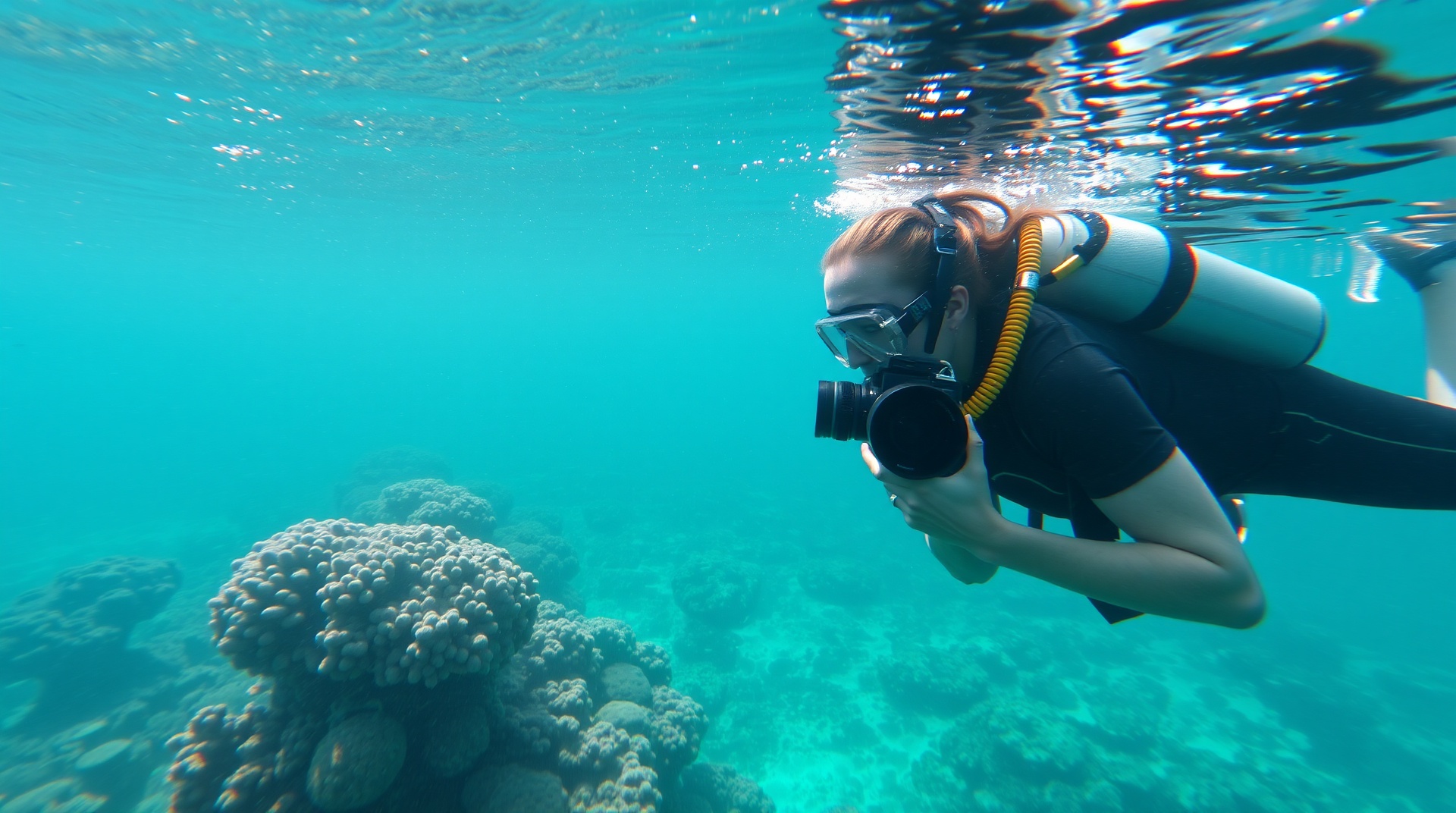
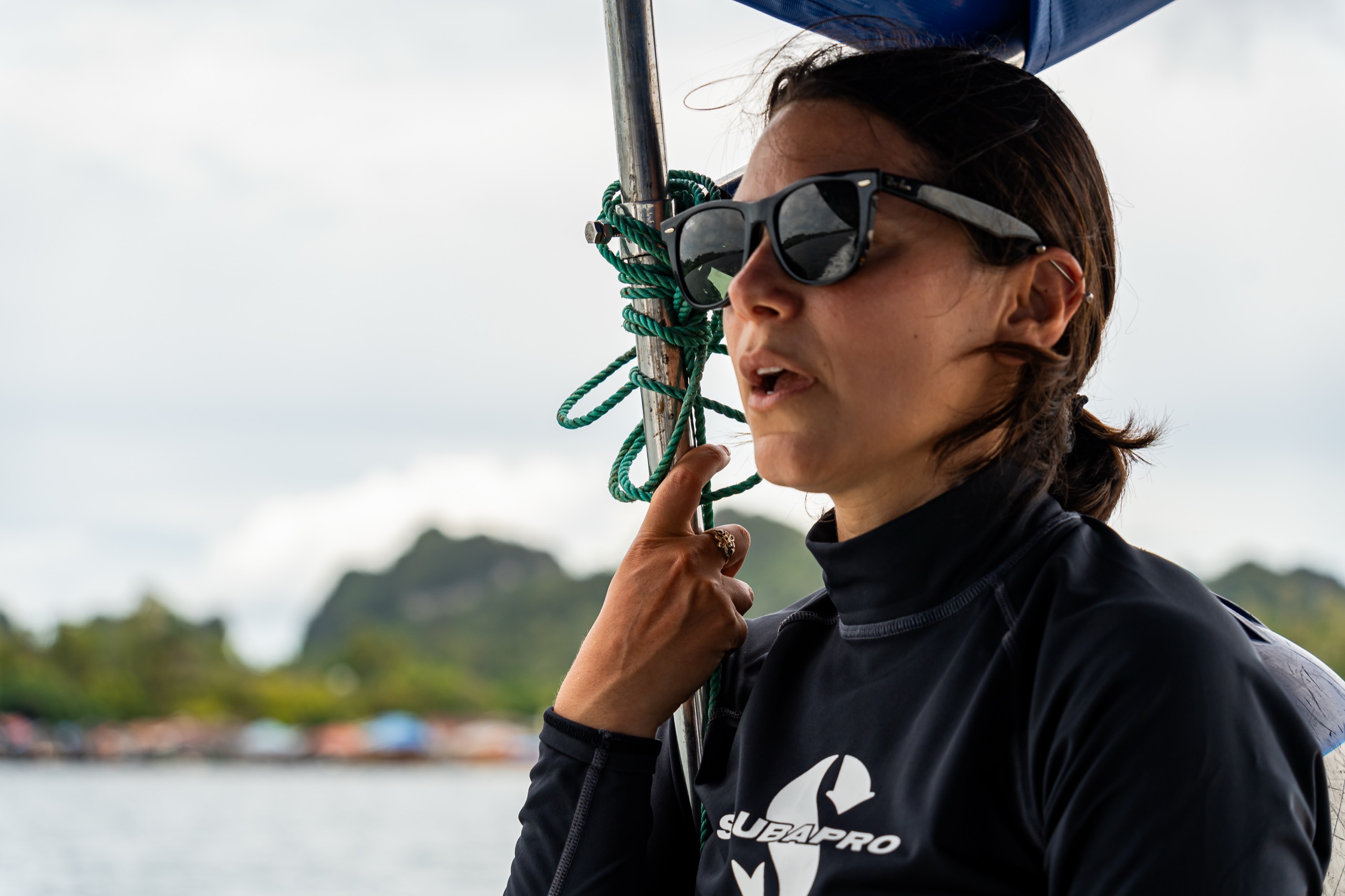
After 15 years doing brand strategy at Ogilvy and Huge, I co-founded Edges of Earth with Adam Moore to document frontline conservation work. Three years, 53 countries, 375+ stories. Somewhere along the way I got my SSI Divemaster certification, became SSI's first-ever sponsored diver, joined the Explorers Club as a flagholder, and started producing a documentary that premiered its teaser at COP30.
I tell you all this not to list credentials but to explain why I write about ocean conservation differently than most people. I've been in the water. I've seen the dead reefs and the recovering ones. I've met the people doing the work. Everything in this piece comes from direct observation, not desk research.
What the frontlines actually look like
The word "frontlines" might bring to mind protest banners and confrontation. In ocean conservation, the frontlines are quieter than that. They're a fisherman in Palau waking up at 4 AM to check his coral nursery tables before the sun gets too hot. They're a grandmother in Fiji explaining to a visiting scientist how the fish used to spawn on this reef 30 years ago. They're a marine biology student in Cebu spending her weekends teaching ten-year-olds to do reef surveys.
These aren't the stories that make the news. The news covers oil spills, bleaching events, and plastic gyres. The actual work of ocean conservation, the daily, unglamorous, community-driven work, happens in the spaces between the headlines.
I've visited conservation projects in 53 countries. The ones that work all have one thing in common: the community drives the work. Outside organizations can fund and support, but the lasting change comes from the people who live there.
Coral restoration stories
Raja Ampat, Indonesia
Yosef used to fish with dynamite. It's effective in the short term and devastating in the long term. When the reef in front of his village collapsed and the fish disappeared, he had a choice: move to the city or try something different. He chose different.
He built coral nursery tables from salvaged materials and started growing coral fragments. It took two years before the first fish came back. Now his catch has tripled. The regional government cited his project as evidence for expanding marine protected areas in the region.
What makes Yosef's story important isn't the coral science. It's the economic proof. He showed his neighbors, and then the government, that conservation could be more profitable than extraction. That argument, made by a fisherman with numbers from his own catch, was more convincing than any NGO report.
Coral gardening in the Maldives
In the Maldives, we documented a resort-based coral restoration program where marine biologists had trained housekeeping and kitchen staff to maintain coral frames during their off hours. The integration of conservation into the resort's daily operations, rather than treating it as a separate program, was what made it sustainable. When every employee feels ownership, the project survives staff turnover.
Mangrove and coastal communities
Mozambique
Amina's story. She convinced 60 women in her coastal community to replant mangrove seedlings on degraded coastline. The project was funded by a carbon credit program, but that wasn't the story. The story was the fish. Mangroves are fish nursery habitat. As the mangroves grew, the fish came back. Food security improved. Income improved. The carbon credits were the funding mechanism, not the purpose.
40,000 seedlings. 12 hectares. Three years. And the fish nursery habitat for 14 species restored. Those numbers mean something because you know Amina and you understand what she risked to make it happen.
Fiji
In a small Fijian village, an elder named Mere had been tracking changes in reef fish populations for 30 years. No spreadsheet, no database. Just memory, passed through daily observation. When we sat with her and she described what she'd seen, the fish that disappeared, the ones that came back, the ones she'd never seen before, it was more compelling than any marine survey I've read.
Traditional ecological knowledge like Mere's is a conservation resource that's disappearing faster than the reefs themselves. Documenting it is as urgent as any coral restoration project.
Marine protected areas that work
Not all marine protected areas work. Some are "paper parks," protected in name but not in practice, with no enforcement, no community buy-in, and no measurable outcomes.
The ones that work share a pattern:
- Community design. The community helps draw the boundaries and set the rules. Not a government office in the capital.
- Economic alternatives. Fishers who lose access to fishing grounds need alternative income. Tourism, aquaculture, monitoring contracts. Without this, enforcement fails.
- Visible results. When fish populations recover and spill over into fishing areas, the community sees the benefit and becomes the enforcer. This takes 3-5 years.
- Local management. Community rangers, not distant coast guards, do the daily monitoring. They live there. They know who's fishing where.
The Palau National Marine Sanctuary, one of the largest in the world, works because Palau has a cultural tradition of conservation (called "bul") that predates any modern environmental movement. The MPA formalized what communities were already doing. That's the template.
The marine protected areas that work aren't designed in offices. They're designed by the communities who fish those waters. The science informs. The community decides.
Women in ocean conservation
Only 2% of technical divers are women. Only 20% of National Geographic explorers are women. Those numbers are changing, but not fast enough.
Some of the most effective conservation leaders I've met in the field are women who never would have described themselves as conservationists. Amina in Mozambique. Mere in Fiji. A marine biologist in Galapagos who's been tending a reef restoration site for a decade with minimal funding and zero recognition.
Women's conservation leadership often looks different from men's. It tends to be community-centered, collaborative, and focused on livelihood outcomes rather than just environmental metrics. That's not a weakness. It's why the projects led by women in our documentation had higher community adoption rates than those that weren't.
I write about this partly because I came to diving and ocean work late, as a woman in a male-dominated field. The barriers are real. The assumption that you don't belong in the water, that you started too late, that technical diving isn't for you. I'm now an SSI Divemaster and extended range technical diver. Starting late doesn't mean you can't catch up.
Youth ocean education
In Cebu, a former marine biology student built an after-school program where kids as young as ten do actual reef monitoring. Not simulated data. Real surveys, submitted to real databases, used by real marine scientists.
When one student, Maria, presented her findings to the municipal council, the room went quiet. There's something about a child presenting reef health data to politicians that no amount of adult advocacy can replicate. The data was the same data a marine biologist would present. The impact was completely different because of who was presenting it.
Youth ocean education programs like this one are among the most cost-effective conservation investments I've seen. They create the next generation of ocean stewards while producing legitimate scientific data. Several communities we've documented have expanded these programs after seeing the results.
What's actually working
After 53 countries and 375+ stories, here's what I've seen working consistently:
- Community-led solutions. The projects that survive leadership changes, funding gaps, and political shifts are the ones owned by the community, not by outside organizations.
- Economic integration. Conservation that improves livelihoods sustains itself. Conservation that costs livelihoods doesn't.
- Youth involvement. Communities that involve young people in monitoring and education build long-term commitment that adult-only programs can't match.
- Women's leadership. Projects with women in leadership positions show higher community adoption and longer-term sustainability in our documentation.
- Story-driven advocacy. The projects that secured policy support and funding all had one thing in common: someone told their story well enough for decision-makers to understand it.
How to support ocean conservation
If you want to help, here's what I'd suggest based on what I've seen:
- Support community-led organizations. Look for programs where the community drives the work, not where an outside organization runs everything.
- Ask about outcomes, not activities. "We held 50 beach cleanups" tells you nothing. "Fish populations in our protected area increased 40% over three years" tells you everything.
- Fund unrestricted. The most effective conservation organizations need flexible funding, not grants tied to specific activities that may not match ground reality.
- Visit if you can. Responsible ocean tourism, when done right, directly funds conservation through fees, employment, and awareness. Go to the places. Meet the people.
- Tell the stories. Share what you see. The biggest barrier to ocean conservation funding isn't lack of money. It's lack of awareness that these programs exist and work.
If you want to learn more about our work documenting ocean conservation, visit Edges of Earth. If you want to book me for a talk on ocean conservation and expedition storytelling, or discuss how your organization can support frontline conservation, get in touch.
Frequently Asked Questions
What does ocean conservation look like on the frontlines?
A fisherman building coral nursery tables from salvaged materials. A women's collective planting 40,000 mangrove seedlings. A 10-year-old submitting reef data to marine surveys. It's smaller, more personal, and more community-driven than most people imagine.
What ocean conservation methods are actually working?
Community-led marine protected areas, coral restoration by local fishermen, mangrove replanting for fish nursery habitat, and youth ocean education. The common thread: solutions designed and run by the communities who depend on the ocean.
How can I support ocean conservation?
Support community-led organizations. Ask about outcomes, not activities. Fund unrestricted. Visit responsibly if you can. And tell the stories of what you see.
Why is storytelling important for ocean conservation?
Data about ocean health doesn't change behavior. Stories about the people protecting the ocean do. A named fisherman protecting a specific reef moves people to action more than a chart about global reef decline.
What is Edges of Earth?
An expedition and storytelling organization I co-founded with Adam Moore. Since 2022, we've documented 375+ frontline conservation stories across 53 countries, with a documentary premiering at COP30 and partnerships with 250+ field experts.