What Visual Storytelling Is (for Brands, Not Game Design)
Search "visual storytelling" and you'll find a strange mix of results. Game design theory. Film school syllabi. Stock photo company blogs trying to sell you subscriptions. What you won't find much of is practical guidance for brand leaders who need to tell real stories with real visuals.
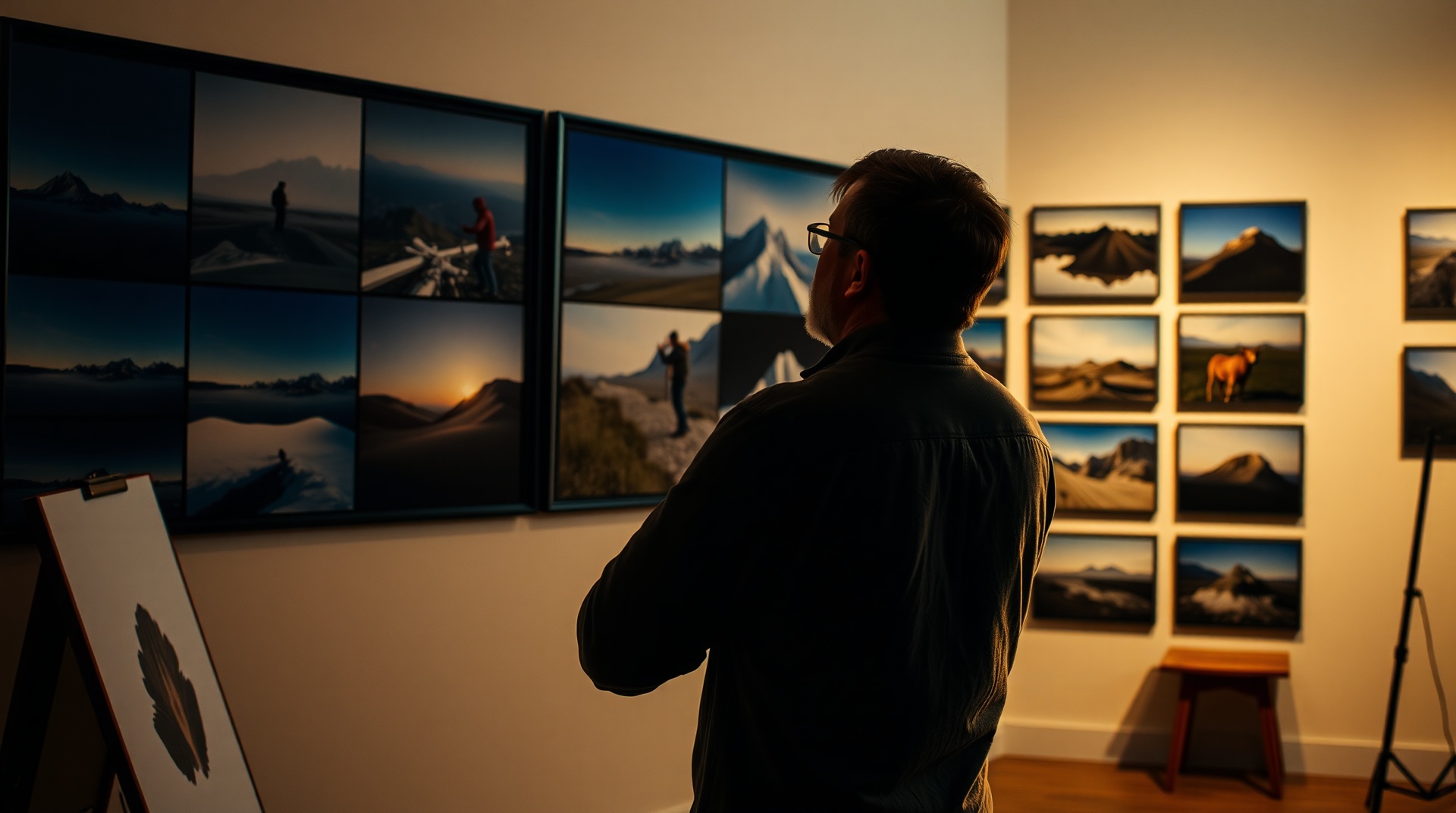
So let me be direct. Visual storytelling, in the context I'm talking about, means using photography, video, and design to carry your brand's narrative. Not to illustrate it. Not to decorate it. To carry it. The visual becomes the story, and the text supports the image rather than the other way around.
I learned this distinction the hard way. For fifteen years in brand strategy at Ogilvy and Huge, I commissioned thousands of images. Most of them were forgettable. Polished, professional, and completely forgettable. They looked like every other brand's visuals because they were produced the same way: brief, shoot, edit, publish. The story was an afterthought.
When I co-founded Edges of Earth and started documenting conservation work across 53 countries, the process flipped. The story came first. We'd arrive at a field site, spend days understanding the work and the people, and then the visuals emerged from that understanding. The difference in what we produced was immediate and obvious.
Why Visuals Outperform Text
This isn't opinion. The neuroscience is settled. The human brain processes visual information roughly 60,000 times faster than text. MIT research confirmed that people can identify images they've seen for as little as 13 milliseconds. We're wired for visual processing in a way that text simply can't compete with.
For brands, this translates into measurable differences. Content with relevant images gets 94% more views than content without. Social posts with images produce 650% higher engagement than text-only posts. Video content is shared 1,200% more than text and links combined.
But here's what those statistics miss: not all visuals are created equal. A generic stock photo of people high-fiving in an office doesn't trigger the same neural response as a photograph of a named person in a specific place doing meaningful work. The brain responds to specificity. It responds to emotional authenticity. It responds to visual information that feels true.
I've watched rooms full of executives scroll past gorgeous stock photography without blinking. Then a single grainy photo from the field stops them cold. The difference isn't production quality. It's truth.
That's the gap most brands fall into. They know visuals matter, so they invest in high-production imagery. But production value and storytelling value are two different things. A $50,000 brand shoot can produce images with zero narrative power, while a smartphone photo from a field visit can stop someone mid-scroll.
Photography as Storytelling
Photography is still the workhorse of visual storytelling. It's the most accessible medium, the most shareable, and when done right, the most immediate. But most brand photography isn't storytelling. It's illustration.
The difference comes down to three things.
Narrative intent
Before anyone picks up a camera, there needs to be a story. Not a shot list. A story. Who is the protagonist? What's the tension? What changes? When I'm preparing for a field shoot, I spend more time on story development than on technical planning. The story determines everything: where we go, who we follow, what moments we wait for.
Presence and patience
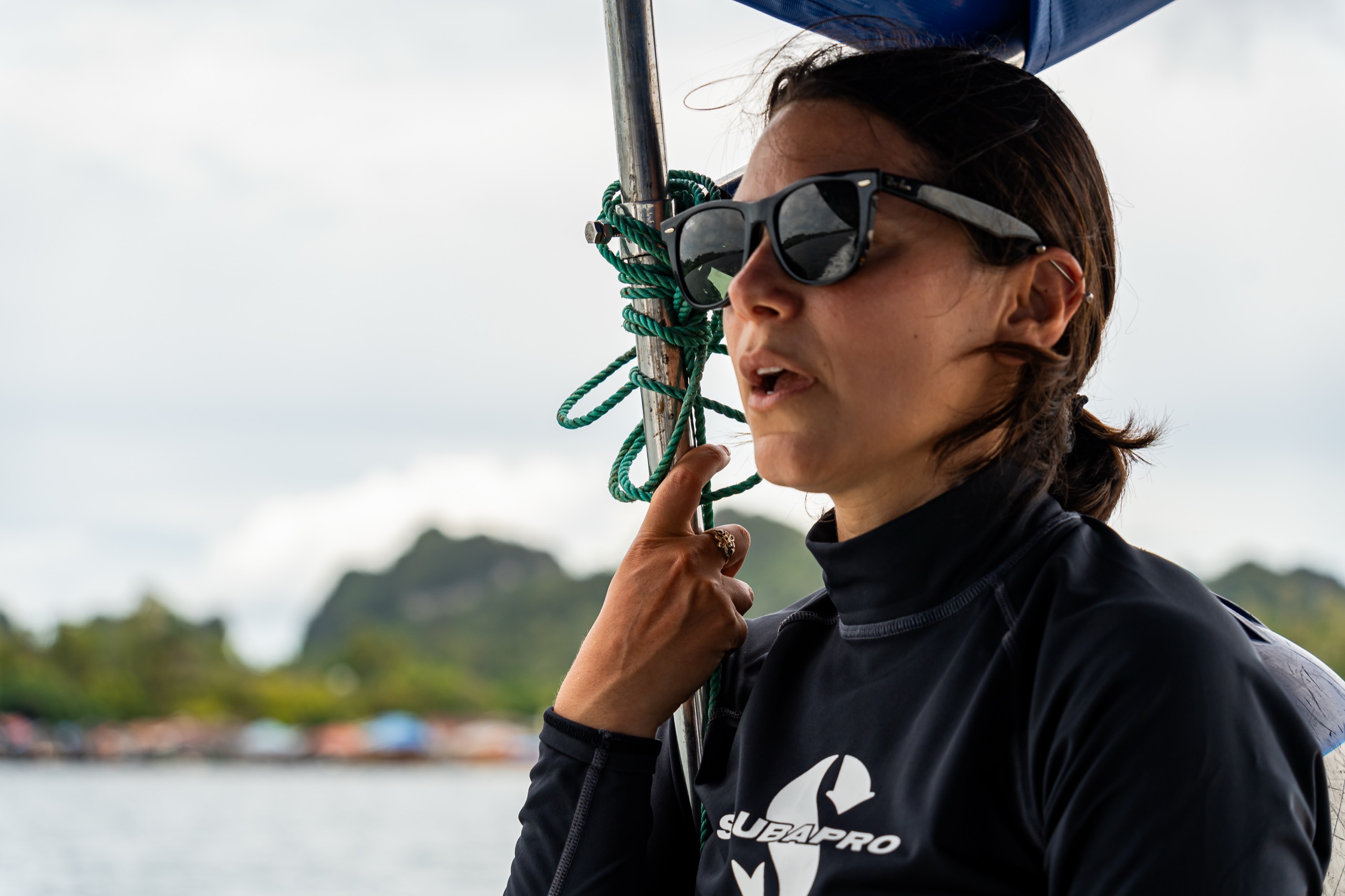
The best photographs come from spending time in a place. Not showing up, shooting for two hours, and leaving. In Raja Ampat, our most powerful images came on day three, after the coral gardeners had stopped performing for the camera and gone back to their actual work. That's when the truth shows up.
Context over composition
Brand photography tends to prioritize composition. Clean backgrounds, perfect lighting, centered subjects. Field photography prioritizes context. The messy workspace. The weathered hands. The environment that tells you where this person is and what their life looks like. Context is what makes a photograph feel like a window into someone's world rather than a catalog image.
This doesn't mean you ignore composition. It means you let the story drive the visual decisions rather than the other way around. Sometimes the most powerful image is the one that breaks every rule of composition because it captures a real moment.
Video as Storytelling
Video adds dimension that photography can't touch: voice, movement, time. When someone speaks to you about their experience, you process tone, expression, and body language simultaneously. That's why a two-minute interview with a conservation worker will build more trust than a ten-page report about their project.
For brands, video storytelling comes in three forms that actually work.
Documentary-style short films
Three to seven minutes. Following a real person through a real situation. This is what we produce at Edges of Earth, and it's the format that gets picked up by press, shared by governments, and actually changes minds. The production values don't need to be Netflix-level. They need to be honest.
Social-native video
Sixty seconds or less, shot vertically, designed for the scroll. The key is the first three seconds. If you can't ground the viewer in a specific place with a specific person in three seconds, you've lost them. I've found that starting with a close-up of hands doing work, then pulling back to reveal the environment, is one of the most effective openings for social video.
Behind-the-scenes documentation
Raw, unpolished footage of actual work happening. This format has exploded because it feels real. No scripts, no lighting rigs, just someone with a phone showing what the work actually looks like. Brands underestimate how powerful this is. Your audience doesn't want to see the highlight reel. They want to see the process.
For a deeper dive into video strategy, I've written a separate guide on video storytelling for brands.
Visual Storytelling Examples from Edges of Earth
I'll pull from our own work here because I can speak to the decisions behind each image and what made them effective.
The coral gardener portrait series
In Raja Ampat, Indonesia, we photographed former dynamite fishermen who'd become coral gardeners. The image that traveled farthest wasn't the underwater coral shot. It was a portrait of Yosef, the lead gardener, holding a coral fragment in weathered hands, looking directly at the camera. His expression communicated the entire story: pride, responsibility, the weight of transformation. Three international outlets ran that image. The regional government used it in their marine protection campaign.
Why it worked: one person, one moment, an expression that told a story without a single word of caption.
The mangrove collective in Mozambique
We documented a women-led mangrove replanting collective on degraded coastline. The most shared image was shot from behind, showing sixty women walking into the mudflats at dawn, seedlings in hand. No faces visible. But the scale of the line of women against the empty coastline communicated something that a close-up portrait couldn't: collective action, the sheer labor of restoration, the vastness of what needed to be done.
Why it worked: sometimes visual storytelling is about scale and composition, not faces. The image made the viewer feel the enormity of the task.
Youth ocean education in Cebu
We followed ten-year-old Maria from her first reef survey to presenting her findings to the municipal council. The visual storytelling technique here was sequence: four images shown in order that traced an arc. Maria nervous at the water's edge. Maria underwater with a clipboard. Maria's data sheet covered in handwriting. Maria at the podium. No single image told the story. The sequence did.
Why it worked: visual storytelling isn't always a single image. Sometimes it's a sequence that creates narrative through juxtaposition and progression.
Your brand's visual story isn't in your asset library. It's in the field, at the factory, in the community where your work actually happens. You have to go there to find it.
Visual Storytelling for Sustainability Brands
Sustainability brands face a particular visual storytelling challenge: the work is often invisible. Carbon reductions don't photograph well. Supply chain improvements don't have a face. Biodiversity metrics are abstract.
The solution is always to find the person. Behind every sustainability initiative, there's a human being whose daily work makes it real. That person is your visual story.
Making invisible work visible
When a renewable energy company asked me to help them tell their story visually, their existing imagery was all solar panels and wind turbines. Beautiful technology, zero emotion. We spent three days with the installation team in rural Brazil. The resulting images showed hands wiring connections, families seeing electric light for the first time, a technician teaching a homeowner how the system works. Same company, same technology, completely different emotional impact.
Avoiding the green cliche
Sustainability visual storytelling has its own set of tired tropes. Hands cupping a seedling. A single tree on a hill. A polar bear on a shrinking ice floe. These images have been used so many times that they've lost all meaning. They actually trigger skepticism now because audiences associate them with greenwashing.
The antidote is specificity. Instead of a generic tree-planting image, show the specific hillside in Guatemala where your reforestation partner works, with the actual team members, captured in the middle of real work. Specificity is the visual equivalent of naming your sources.
Documentation over production
The sustainability brands winning the visual storytelling game right now are the ones treating their content teams like documentarians, not advertisers. Patagonia has been doing this for years. Their visual content looks like photojournalism, not marketing. That's intentional, and it's why their audience trusts them more than brands spending ten times the production budget.
For the broader framework on sustainability communication, see the guide on sustainability storytelling.
Stock vs Field Photography: The Credibility Gap
I'm not going to tell you to never use stock photography. That's unrealistic. Not every social post or blog header needs a custom shoot. But I will tell you this: every time you use a stock image to represent your brand's actual work, you're making a credibility withdrawal.
Your audience can tell. Maybe not consciously, but something registers as "off" when a company claims to be doing meaningful work in communities and the accompanying image is clearly shot in a studio with models. The lighting is too perfect. The diversity feels cast. The environment is nowhere specific.
When stock works
- Utility content. Blog post headers on general topics. Presentation backgrounds. Internal communications. Places where the image isn't carrying narrative weight.
- Conceptual illustration. When you're discussing abstract ideas and the image is clearly metaphorical, not representational.
- Placeholder during production. While you're building your field photography library, stock can hold the space. Just don't leave it there permanently.
When stock fails
- Impact stories. Any time you're claiming specific outcomes from specific work. Use real photos from the real work.
- Team and culture content. Showing "your team" with stock models is the fastest way to destroy trust with potential employees.
- Sustainability reporting. Regulators and informed consumers will spot stock imagery in sustainability communications, and it undermines everything else you're saying.
The cost argument doesn't hold up anymore either. A smartphone, a half-day field visit, and someone who knows how to look for story moments will produce imagery that outperforms any stock subscription. The investment is time and intention, not equipment.
Building a Visual Storytelling System
One great photo shoot doesn't make a visual storytelling brand. You need a system that produces story-driven imagery consistently, across campaigns, across platforms, across years.
Step 1: Audit what you have
Pull every image your brand published in the last 90 days. I mean everything. Social posts, website, presentations, ads. Sort them into two piles: images that tell a story and images that fill space. Most brands discover the ratio is about 10:90. That's your baseline. The goal is to flip it.
Step 2: Define your visual narrative pillars
Choose three to five themes that connect your brand's mission to the real world. For Edges of Earth, ours are: frontline conservation workers, community-led solutions, ocean ecosystems, youth education, and cultural connection to nature. Every visual we produce ties back to one of these pillars.
Step 3: Plan quarterly field shoots
Not "content shoots." Field shoots. Go to where the work happens. Assign each shoot to a narrative pillar. Brief your photographer or videographer on the story, not the shot list. The story shapes the visuals.
Step 4: Create story-driven style guidelines
Most brand style guides define colors, fonts, and logo placement. Add a section on narrative content. What makes a photo "on-brand" in terms of story? Who appears in your images? What moments do you capture? What emotions do you convey? These rules matter more than whether the logo is in the corner.
Step 5: Build a tagged, searchable library
Tag every image by narrative pillar, location, protagonist, and story arc. When a campaign needs visuals, your team should be able to search by story, not by aesthetic. "Find me images from the Mozambique mangrove story" is a better search than "find me images with green tones."
Getting Started with Visual Storytelling
You don't need to overhaul everything at once. Start small and build from there.
- Pick one story. Not one campaign. One actual story from your organization's work. A project, a team member, a community you serve. Something real and specific.
- Send someone with a camera. It can be a smartphone. Send them to where the story is happening. Not for two hours. For a full day. Tell them to look for moments, not poses.
- Capture the arc. Beginning, middle, turning point. You need at least five to seven images that, shown in sequence, tell the story without any text. If you can do that, you have visual storytelling.
- Test it. Post the sequence on social. Write a brief caption that adds context but doesn't explain what's already visible in the images. Watch the engagement compared to your stock-image posts.
- Build from the response. What resonated? What got shared? What prompted people to ask questions? That feedback shapes your next shoot.
If you want help building a visual storytelling strategy for your brand, that's something I work with organizations on. Here's how I work, or just get in touch.
Frequently Asked Questions
What is visual storytelling for brands?
It's using photography, video, and design to carry your brand's narrative rather than just decorating it. The visuals become the primary vehicle for meaning, showing real people, real places, and real moments instead of relying on generic or stock imagery.
Why is visual storytelling more effective than text alone?
The brain processes visual information roughly 60,000 times faster than text. Visual content gets 94% more views and 650% more engagement on social platforms. But the real advantage is emotional. A photograph of a specific person in a specific place creates an instant connection that paragraphs of description can't match.
How do you create visual storytelling without a big budget?
Start with a smartphone and the people already doing the work. The most compelling visual stories often come from behind-the-scenes documentation, not polished productions. Focus on capturing real moments, genuine expressions, and authentic environments. One honest photo from the field outperforms an expensive stock image every time.
What are good visual storytelling examples?
Patagonia's field photography showing actual environmental projects. National Geographic's community-centered visual narratives. The Edges of Earth expedition series documenting conservation workers across 53 countries. What they share is specificity: real people, named places, documented moments rather than staged scenes.
Should brands use stock photography or original content?
Original content wins for any storytelling purpose. Stock works for utility needs like blog headers or presentation backgrounds, but it can't carry narrative weight. Audiences recognize stock imagery instantly, and it undermines trust when used to represent your brand's actual work or impact.